

You lost. That doesn't make you a loser.

The recent World Cup final got me thinking more widely about winning and losing, and their significance in leadership.
As we all know, Spain won and Argentina lost. Fact.
What we then witnessed was more complicated: a confrontation between players that escalated into a brawl.
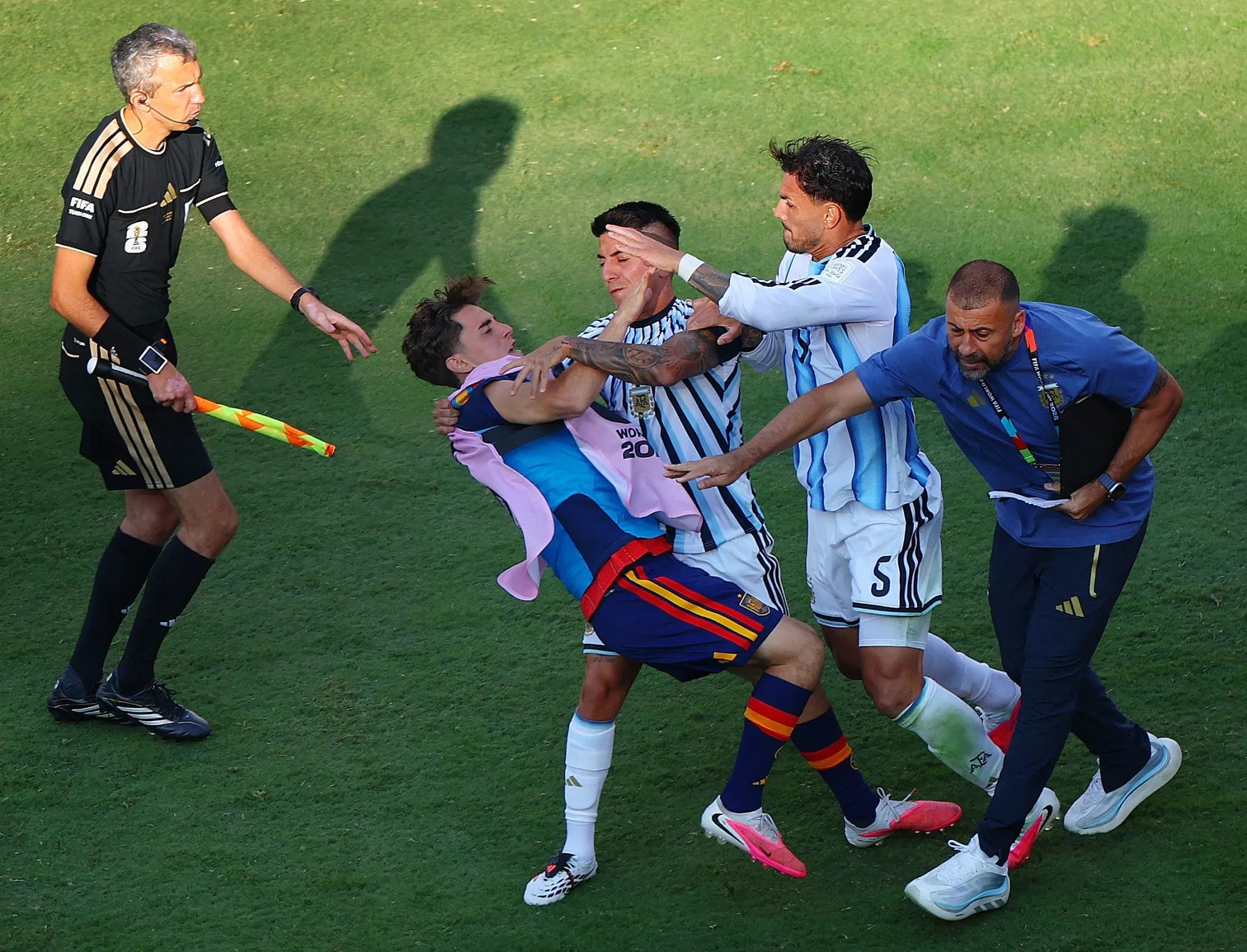
There are many reasons why this might have happened, and I’m not here to conjecture about those. What I’m curious about is what it means to win or lose, and its relevance to leadership.
Do you see winning and losing simply as outcomes? Or are they so important to you that they define who you are and how you behave? Do you believe that if you win, you’re a winner; and if you lose, you’re a loser?
Phrases like ‘winning at life’ and ‘winning or losing an argument’ have been around for a while. But when we hear prominent politicians, or anyone else, dismissing opponents as losers - as if the label tells us everything we need to know about them - I wonder, do we secretly buy into it?
In other words, have winning or losing become matters of identity that impact what we think, feel, say, and do?
The author Nick Hornby explores this brilliantly in Fever Pitch - also one of my favourite movies. In this autobiographical account of a life lived through Arsenal Football Club, Hornby describes how the club’s results became part of his own emotional landscape. A win brings elation and release; a defeat brings darkness and even despair. His life revolves around the seasons of football.
This is the collective power of sport. We say, ‘We won,’ although we never touched the ball, and ‘We were robbed’ as though something has been stolen from us.
That sense of belonging can be joyful and sustaining. It can connect strangers and give people a shared sense of home. The risk is that we identify so strongly with the the team’s victory or loss that it feels as if it’s happening to us. An opponent’s success feels like a personal attack.
The same can happen in leadership. Leaders can become so fused with their position and / or organisation that their success becomes proof of their worth. In the extreme, they see failure as so negative that all they can do is find someone else to blame.
Over time, this can breed a culture of fear in which no-one feels safe to be themselves.
It’s not that winning and losing don’t matter. They do. Competition produces winners and losers. Life brings success and failure.
But neither victory nor defeat is ever complete. There are always gains and losses along the way. What matters is how we relate to them.
As leaders, whether we prevail or fail we need to learn to live with it. To care deeply about something without allowing it to determine our behaviour.
If we habitually describe other people as losers, how can we live with ourselves if we fail? And when we do fail (which we will, at some point), instead of acknowledging it we’re more likely to look outside ourselves for the reasons why.
Even our success will feel fragile: like something that must be continually repeated and defended.
In reality, neither failure nor success lasts forever. As the saying goes in the culinary world, “You’re only as good as your last meal”.
In leadership and in life, the more tightly we bind our identity to winning, the less freely we can see what is actually happening. At its extreme, our fear of losing is so great that we can’t even entertain its possibility. Our thinking becomes blinkered, eventually polarised; we become unreasonably defensive; we protect what needs to be examined and changed; and we resent the very events - and people - we could actually learn from.
What if we see success and failure as learning grounds? Then from our failures we can develop courage. And in our successes we can cultivate humility.
Speaking for myself, I wouldn’t want to work for a leader who’d never experienced some kind of failure. Or, worse still, needed me to believe they’d never failed.
I’d prefer to work with someone who has the capacity to stand inside disappointment and not be defined by it. And who can openly acknowledge the other person or team who prevailed (this time), learn what there is to learn, and return to what matters.
With love from the mountain,
Sally-Anne
A rich conversation Sally-Anne - I love when you say "neither victory nor defeat is ever complete" - if we can hold that then everything softens. What if we can stand in the fire of both ends of this polarity and be whole and complete regardless. Now that is winning (sic)